Bulletins

- Ref # CAB10172
- November 18, 2026
First Amendment Rights: What Officers Need to Know About Citizens Recording Police
By Robert Phillips
Deputy District Attorney (Ret.)
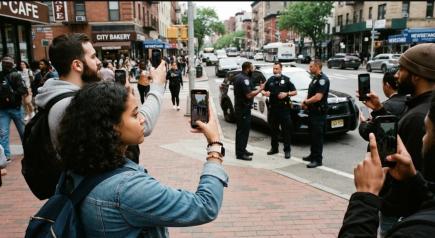
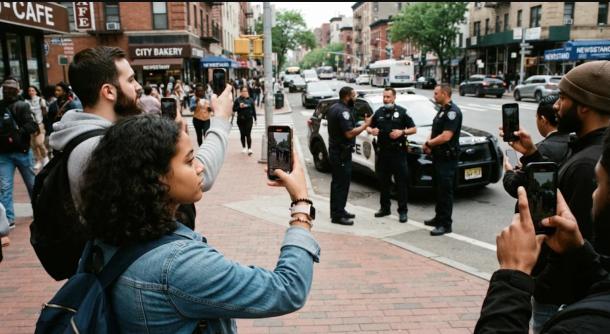
The federal Second Circuit Court of Appeals (covering Connecticut, New York, and Vermont) just published a new court decision reiterating the long-standing First Amendment rule to the effect that private citizens have a constitutional right to photograph and/or videotape law enforcement when in public places. The new case of Massimino v. Benoit (2nd Cir. Aug 17, 2026) __ F.4th __ [2026 U.S.App. LEXIS 24722] makes it clear that this includes the videotaping of the outside of a police station. Attempts by the police to stop someone from doing so has the potential of exposing the offending law enforcement officers to potential civil liability.
In Massimino, a unanimous three-judge panel of the federal Second Circuit, upholding the trial court’s decision, ruled that Keith Massimino, a self-described “First Amendment auditing hobbyist,” had a constitutional right to film the exterior of a police station in Waterbury, Connecticut. Two officers, including Matthew Benoit, confronted Massimino while he was videotaping a police station, telling him it was illegal to do so (which was false). When the officers demanded that he identify himself, Massimino refused to do so. The officers arrested him for obstruction; a charge that was ultimately dismissed by prosecutors two and a half years later.
Massimino sued the officers in federal court, alleging violations of his First (freedom of speech) and Fourth Amendment (false arrest) rights. The Second Circuit upheld the arrest, noting that Massimino did not have the right to refuse to identify himself; his detention for investigation being lawful under the circumstances. However, on the issue that is important here, the Court specifically held that a private citizen has the constitutional, First Amendment right to photograph or videotape law enforcement in public places. This includes the right to videotape the outside (or at least those areas exposed to public view) of a police station.
As noted by the Court: “When the government wants to preserve its privacy, it may build a fence or close a door—but not ban speech.”
Despite this ruling, the Court upheld the trial court’s dismissal of Massimino’s lawsuit in that not being the subject of any prior rulings out of the Second Circuit, the officers were ....
© 2026 Legal Updates, LLC.
This content is protected by copyright law. Republishing or redistribution in any form without written permission is strictly prohibited. For licensing or reprint requests, contact support@legalupdates.com.