
- Ref # CAC10173
- November 03, 2026
Can a court force a defendant to testify just to show their tattoos to a jury? Ninth Circuit rules in a Fifth Amendment case.
By Robert Phillips
Deputy District Attorney (Ret)
- The Fifth Amendment Privilege Against Self-Incrimination
- The Fifth Amendment Right Not To Testify
- The In-Court Display of Tattoos as Non-Testimonial Evidence
- Legal Effect of Binding Precedent
- Prejudicial Error Involving a Constitutional Issue
One-Minute Summary: Defendant and another committed an armed robbery (referred to under federal law as a “Hobbs Act” robbery) of a market in Yakima, Washington, pistol-whipping and beating the store manager in the process. DNA from a glove dropped at the scene and other circumstantial evidence led to defendant’s eventual arrest and prosecution.
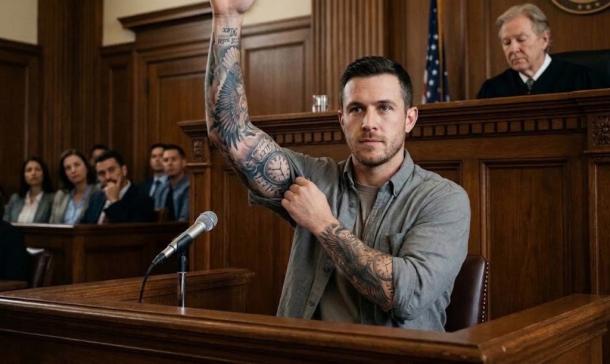
During trial, the defense proposed to have defendant display his hands to the jury, showing the jurors defendant’s tattoos on the back of his hands and fingers, to be compared with a blurry store video from the robbery itself where it appeared that the robber who dropped his glove did not have any tattoos, at least on his fingers.
The district (trial) court judge ruled that despite prior Ninth Circuit case authority to the contrary, such evidence was “testimonial,” and as such, required defendant to waive his Fifth Amendment rights, testify, and be subject to cross-examination. Convicted on all counts and sentenced to prison, defendant appealed. The Ninth Circuit Court of Appeals reversed. Following United States v. Bay (9th Cir. 1984) 762 F.2nd 1314, the Court held that by forcing defendant to take the stand as a prerequisite to displaying an identifying physical characteristic to the jury (i.e., his tattoos), the district court violated defendant’s Fifth Amendment rights against self-incrimination and not to testify.
The Court further held that being a violation of the defendant’s constitutional rights, the Government was required to prove that the error was harmless beyond a reasonable doubt in order to preserve the conviction. Under the circumstances of this case, the Government was unable to meet this standard. The error, therefore, was not harmless, requiring the Court to reverse defendant’s conviction.
DETAILED CASE ANALYSIS BY ATTORNEY ROBERT ....