
- Ref # CAE00014
- May 03, 2022
The “Stalking Horse” Theory for Parole and Probation Fourth Waiver Searches
The “Stalking Horse” Theory for Parole and Probation Fourth Waiver Searches.
By Robert Phillips, Deputy District Attorney (Ret).
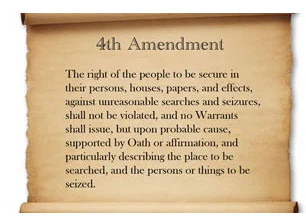
Have you ever heard of the “stalking horse” theory, as it relates to parole and probation Fourth waiver searches (A “Fourth wavier search,” of course, refers to warrantless searches of a parolee or probationer’s person and property [e.g., house, vehicle, containers, etc.] based upon the parolee or probationer’s prior express waiver of his Fourth Amendment search & seizure rights as a condition of being released from custody.) The “stalking horse” theory is based upon the idea that a Fourth Waiver search is a tool meant for parole or probation officers only, intended to be used as a means for keeping a check on the activities of their parolees and probations, respectively.
At one time it was believed that for a federal or state law enforcement officer to conduct a warrantless Fourth waiver search, that officer needed the permission of the subject’s parole or probation officer. In conjunction with this theory, the courts would not let law enforcement officers get around the search warrant requirement by simply using a parole or probation officer as a “stalking horse,” i.e., utilizing the parole or probation officer’s warrantless search authority to avoid the necessity of getting a warrant.
California has long since eliminated the need for local law enforcement to seek the permission of a probation officer before conducting a probation search. (See People v. Mason (1971) 5 Cal.3rd 759.) The same theory was eventually extended to state parolees. (See People v. Reyes (1998) 19 Cal.4th 743.)
These .... © 2026 Legal Updates, LLC.
This content is protected by copyright law. Republishing or redistribution in any form without written permission is strictly prohibited. For licensing or reprint requests, contact support@legalupdates.com.