
- Ref # CAC10153
- July 23, 2026
Appeals Decision on Factually Incorrect Warrant Affidavits. Do Errors or Omissions Undermine a Warrant’s Validity?
By Robert Phillips
Deputy District Attorney (ret.)
Legal Issues and Case Citation
- Blood draw search warrants in a DUI case
- A Franks evidentiary hearing and when it’s not legally necessary
- Correcting a search warrant affidavit by adding omitted facts and retesting for probable cause
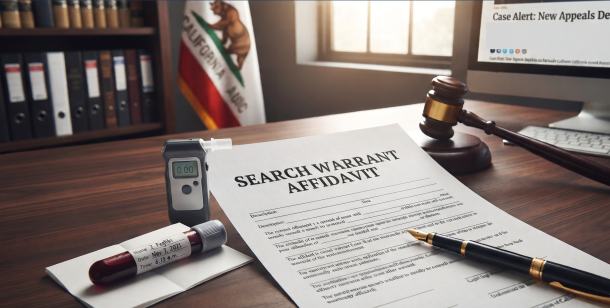
Rule: In a search warrant application for a blood draw in a felony DUI case, an officer’s failure to inform a magistrate of the arrestee’s request for a breath test does not undermine the validity of the search warrant. In such a case, a court is required to merely add the omitted, material information to the affidavit and retest it for probable cause. An evidentiary hearing pursuant to Franks v. Delaware is legally unnecessary when there are no contested evidentiary issues to be decided.
One-Minute Summary: The defendant was involved in a fatal traffic collision, in part caused by the defendant driving at 129 miles per hour. Upon determining there was probable cause to believe the defendant was under the influence of alcohol, he was read the statutorily required implied consent admonition, pursuant to Vehicle Code § 23612, and as contained in the DMV DS-367 form. The defendant declined to submit to a blood or breath test. As a search warrant asking for a blood draw was being prepared, the defendant allegedly changed his mind and specifically requested that he be given a breath test.
The officer, however, ignored the defendant’s request and submitted a warrant affidavit to a magistrate requesting a blood draw, but without noting the defendant’s request for a breath test instead. The results of the blood test showed that the defendant had a blood/alcohol content of 0.14% more than three hours after the traffic collision. Charged in state court with second-degree murder and other DUI-related charges, the defendant filed a motion to suppress the blood/alcohol results, arguing that because he had agreed to submit to a breath test—a fact that the affiant in the search warrant affidavit failed to mention—the warrant violated his Fourth Amendment rights.
The trial court agreed, ruling that the warrant never would have been issued had the search warrant magistrate known that the defendant agreed ....