
- Ref # CAE00017
- November 21, 2022
Law Enforcement Quotas
By Robert Phillips, Deputy District Attorney (Ret).
Except for Vehicle Code violations, citizen contact quotas are not illegal in California even though probably not a good idea.
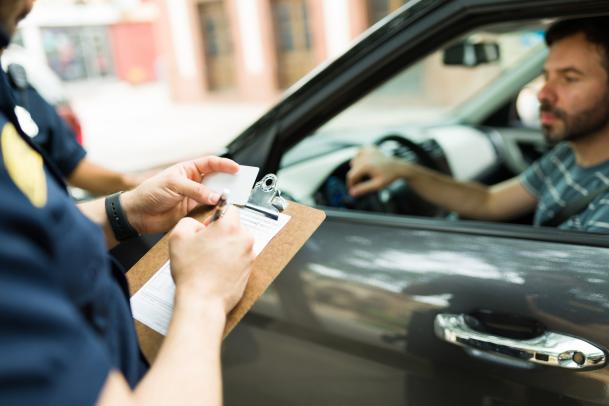
I’ve recently heard rumors concerning various California law enforcement agencies imposing upon their patrol and traffic officers a requirement that they conduct a minimum number per shift of what might best be termed as “contacts” (or “citizen contacts”) with individuals on the street. On its face, the apparent intent of such a policy is to encourage officers to get out of their respective patrol and traffic cars and talk to citizens, making their presence known. On its face, such a requirement seems appropriate, good police work, and if conducted in a positive, respectful manner, good public relations. But when a law enforcement agency attaches to such a policy a required minimum number of such citizen contacts, often with possible counseling or discipline imposed for an officer’s failure to adequately comply, we have to ask ourselves whether we are wandering into the area of a possibly prohibited “quota” system.
In evaluating any individual law enforcement agency’s policies dealing with this issue, we have to ask ourselves three questions:
(1) What is meant by the term “citizen contact ”
(2) Does a requirement that an officer conduct a minimum number of citizen contacts impose upon that officer what might otherwise be called a “quota ”
(3) If this requirement is a quota, does an agency’s policy requiring its officers to conduct a specified number of citizen contacts violate any prohibitions or restrictions imposed by statute or case law
An officer-initiated citizen contact, in practice, can be found to have occurred in any number of situations. If we can first eliminate interviews with crime victims or witnesses, or anytime someone is arrested upon an officer responding to a reported crime, we are left with what are commonly categorized as “consensual encounters” and “detentions.” A consensual encounter occurs any time an officer walks up to someone on the street and seeks to merely talk with him or her, and when the person is free to ignore the officer and simply walk away. .... © 2026 Legal Updates, LLC.
This content is protected by copyright law. Republishing or redistribution in any form without written permission is strictly prohibited. For licensing or reprint requests, contact support@legalupdates.com.