
- Ref # CAC10151
- July 15, 2026
Cell Location Data Can Help Pinpoint People’s Whereabouts, But Privacy Expectations Still Matter
By Robert Phillips
Deputy District Attorney (Ret)
CASE LAW:
- Geofence warrants: use of a three-part warrant
- The use of location history information in a criminal investigation
- Cellphone location history and the reasonable expectation of privacy
RULE:
Geofence searches for location history involve a cellphone holder’s reasonable expectation of privacy. For this reason, a search warrant is necessary to obtain such information. Whether the use of a three-part geofence search warrant as used in this case is constitutionally reasonable is an issue yet to be decided.
BRIEF SUMMARY:
The defendant, Okello Chatrie, robbed a credit union at gunpoint. Immediately prior to the robbery, witnesses observed him talking on a cellphone. Weeks later, knowing that the robber had had a cellphone with him, investigators applied to a Virginia magistrate for a three-part geofence search warrant.
With the warrant directed to Google, the affiant police officer used a three-part warrant process:
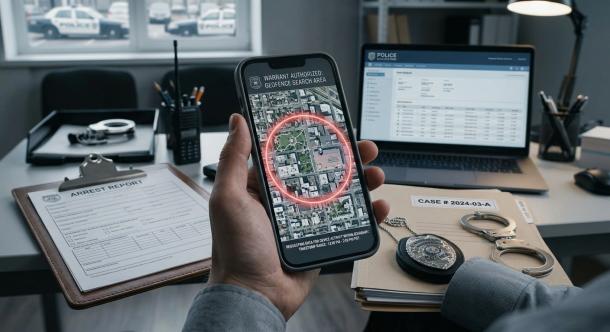
First, it sought a geofence that was a circle with a radius of 150 meters surrounding the credit union, asking for anonymized location data for all cellphones within the geofence 30 minutes before to 30 minutes after the robbery.
Second, the affiant narrowed down the list by reviewing the time-stamped location coordinates of each device and comparing that against the known time and location information that is specific to this crime, asking Google to provide additional (but still anonymized) data for a two-hour period.
Third, the affiant further narrowed the list by comparing additional information regarding travel and time against the known time and location information specific to this crime.
Via this method, the affiant came up with a list of three cellphones, one of which belonged to Chatrie. Further investigation led to charging Chatrie in federal court with bank robbery. Ruling on a motion to suppress, the trial court found a Fourth Amendment violation, but denied the motion based upon the officer’s good faith reliance upon the validity of this geofence warrant procedure.
The Fourth Circuit Court of Appeals affirmed the trial court’s ruling in a 2-1 decision, but on the theory that the ....