
- Ref # CAC10146
- May 28, 2026
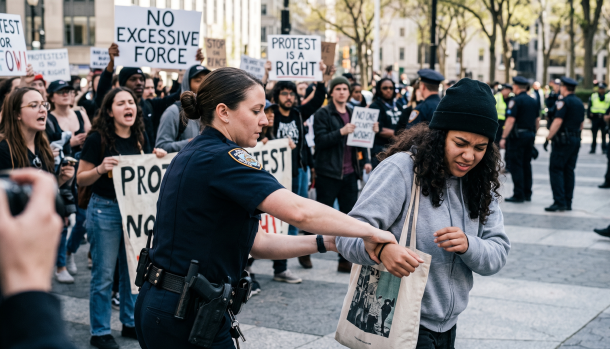
Supreme Court Qualified Immunity Ruling: Officer Uses Wristlock on Nonviolent Protester. Was it Excessive Force?
By Robert Phillips
Deputy District Attorney (ret.)
Legal Concepts and Case Citation
- Qualified immunity from civil liability
- A wristlock as a use of force on a non-violent protester
- Use of a wristlock and the Fourth Amendment
Rule: The use of excessive force by a law enforcement officer on a nonviolent protester violates the Fourth Amendment. The use of a wristlock to force compliance by an otherwise non-violent protester may or may not subject the officer to civil liability, depending upon the existence of prior case law that would have put the officer on notice that the force used was unconstitutionally excessive.
Summary: On inauguration day for a new governor in Vermont, protesters staged a sit-in at the state capitol’s legislative chambers. When the capitol closed for the day, police officers told the protesters that they would be arrested for trespassing if they did not leave. Many of the protesters, including Shela Linton, refused to ....
Keep reading this case update
Create a free Basic account to unlock the rest of this article and stay current on California & federal rulings.
- Whether a wristlock on a passive protester is excessive
- What clearly established law means for qualified immunity
- Whether Amnesty America put the officer on notice