
- Ref # CAB00016
- November 22, 2020
Passwords and Biometric Features for Digital/Electronic Devices
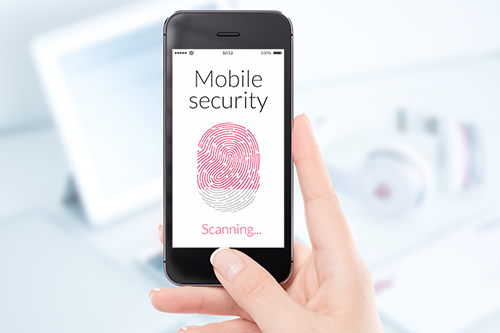
In the last California Legal Update (Vol. 24, #2, Jan. 23, 2019), I briefed the federal district court opinion of In re Search of a Residence in Oakland (N.D. Cal. Jan. 10, 2019) __ F.Supp.3rd __ [2019 U.S. Dist. LEXIS 5055], emphasizing a magistrate judge’s conclusion that forcing a suspect to provide passwords and/or to use his or her biometric features (e.g., finger or thumbprint, facial feature recognition, etc.) to unlock cellphones and other digital or electronic devices violates the subject’s Fifth Amendment selfincrimination rights. The stated reason for this rule is that both passwords and biometric features are considered to be “testimonial communications.” Well, I’m told now that this is not necessarily correct, at least as to biometric features. While the magistrate judge was correct when she applied this rule to passwords (at least according to prior case law), there’s a serious difference of opinion as to whether it also applies to biometric features. The magistrate judge cited only one prior case talking about biometric features being testimonial communications which itself came from another federal district court (i.e., trial court), located in Illinois. (In re Application for a Search Warrant (N.D. Ill. 2017) 236 F. Supp. 3rd 1066.) But not cited by the magistrate judge was a case from the Minnesota Supreme Court (Minnesota v. Diamond (Jan 17, 2018) 905 N.W.2nd 870.), where the issue was discussed in excruciating detail. The Minnesota Court specifically concluded that biometric features are not testimonial communications. Also (cited by the magistrate judge but ignoring its discussion of the issue) is a case from a circuit court in the state of Virginia (Commonwealth v. Baust (Va. Cir. Ct. 2014) 89 Va. Cir. 267.), where it was similarly held that biometric features are not testimonial communications, and thus not protected by the Fifth Amendment. The bottom line is that we have a split of opinion on this issue; two federal trial level courts holding that a criminal suspect cannot be forced to use his or her biometric features to open cellphones or other digital or electronic devices without violating the Fifth Amendment, and a state supreme court (Minnesota) and a state circuit court (Virginia) ruling to the contrary. Such decisions, both from the federal courts and other states, are considered to be “persuasive” only, and not controlling in California. But there are ....
© 2026 Legal Updates, LLC.
This content is protected by copyright law. Republishing or redistribution in any form without written permission is strictly prohibited. For licensing or reprint requests, contact support@legalupdates.com.