
- Ref # CAB00062
- December 12, 2021
Gov’t. Code § 7286.5 (AB 490) and Unlawful Restraint
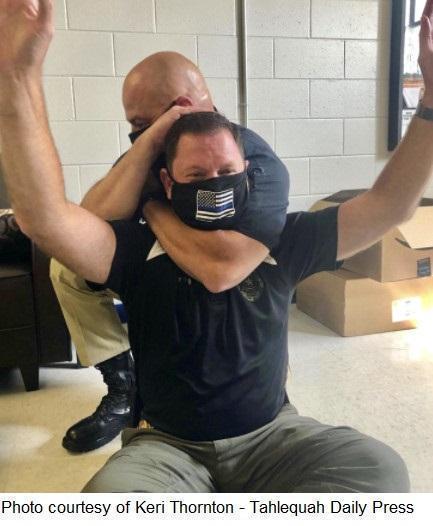
On January 1, 2021, Calif. Gov’t. Code § 7286.5 became effective via AB 1196, prohibiting a law enforcement agency from authoring the use by its officers of either the “carotid restraint” (defined as “a vascular neck restraint or any similar restraint, hold, or other defensive tactic in which pressure is applied to the sides of a person’s neck that involves a substantial risk of restricting blood flow and may render the person unconscious in order to subdue or control the person) or the “choke hold” (defined as “any defensive tactic or force option in which direct pressure is applied to a person’s trachea or windpipe”). This year (via AB 490, effective Jan. 1, 2022), the section is being expanded with the addition of a new subd. (a)(2), adding a prohibition on “techniques or transport methods that involve a substantial risk of positional asphyxia.” If “positional asphyxia” is a new term to you (as it was for me), never fear; the Legislature defines it for us. Per new subd. (b)(4): “‘Positional asphyxia’ means situating a person in a manner that compresses their airway and reduces the ability to sustain adequate breathing. This includes, without limitation, the use of any physical restraint that causes a person’s respiratory airway to be compressed or impairs the person’s breathing or respiratory capacity, including any action in which pressure or body weight is unreasonably applied against a restrained person’s neck, torso, or back, or positioning a restrained person without reasonable monitoring for signs of asphyxia.” In other words, you can’t pile a prisoner into the back seat of your patrol car (or anywhere else), leaving him in a position where there is at least a “substantial risk” that, by doing so, his breathing will be impaired. Additionally, you can’t hold a prisoner down on the ground with your knee on his neck for 8½ minutes as he complains about not being able to breathe. (Sound familiar ) Note, however, that this section, even as amended, does not make it a crime to .... © 2026 Legal Updates, LLC.
This content is protected by copyright law. Republishing or redistribution in any form without written permission is strictly prohibited. For licensing or reprint requests, contact support@legalupdates.com.