
- Ref # CAC00077
- August 06, 2022
Prolonged pretextual traffic stops are a violation of the Fourth Amendment.
- Pretextual Traffic Stops
- Prolonged Detentions and Traffic Stops
- Use of Police Body Cameras
Using a minor traffic offense as a pretext for making a traffic stop so that a more serious criminal offense can be investigated is lawful. However, absent developing at least a reasonable suspicion to believe that a more serious offense is being committed, a traffic stop cannot be prolonged past the amount of time it would normally take to complete the mission of a simple traffic stop.
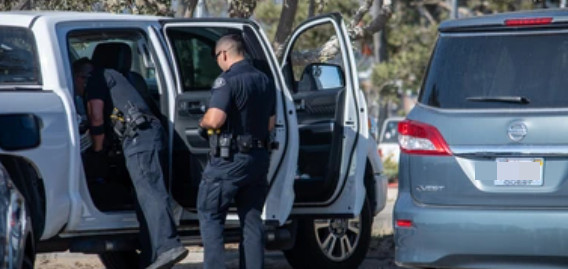
Defendant Ernesto Ayon was the target of an investigation spearheaded by Officer Scott Williams of the San Jose Police Department’s Metro Unit. The Metro Unit specializes in narcotics investigations. On June 19, 2018, at about 9:00 p.m., Officer Williams (in plain clothes) and other officers were following defendant as he drove down West Taylor Street in San Jose. The officers were watching for a traffic violation that would justify a “pretextual traffic stop.” It didn’t take long. As defendant approached the intersection of North San Pedro Street and prepared to make a right turn, he drove into the right-hand-side bicycle lane too early, traveling in the bike lane for about 50 to 70 feet before the start of the broken painted lane line that marks the point where it is legal to move over the line and closer to the curb. And then he failed to use his turn signal until he actually reached the corner. Both are violations of the Vehicle Code, albeit relatively minor ones. As a result, a patrol unit effected a traffic stop within the next couple of blocks. Body cameras from several of the officers at the scene recorded the events that followed, marking the exact time of each step of the contact, and described in excruciating detail by the Appellate Court. But as is relevant to the issues here, it was noted that defendant’s documentation (license and registration) were obtained by the first officer to contact him. As a warrant check was being run, defendant was approached by Officer Williams ....