
- Ref # CAC00134
- March 14, 2024
New Decision Rules on Constitutionality of Fixed-Camera Monitoring in Public
- Constitutionality of a city’s fixed camera monitoring program
- San Diego’s “City I.Q.” camera streetlight program
- The intrusiveness of a fixed camera monitoring program and the Fourth Amendment
A fixed camera monitoring program spread throughout parts of a city is constitutional.
Defendant Kevin Eugene Cartwright and his accomplice, Lorena Espinoza, robbed a flooring store in downtown San Diego on October 10, 2018. Espinoza went into the store first and led its owner and operator, identified as G.R., to the back of the store. Cartwright entered the store shortly thereafter “wearing a granny mask and sunglasses” and “incapacitated” G.R. by first kicking him, then shooting him three times, killing him. Cartwright then pried open the cash register and took its contents.
Unbeknownst to Cartwright, his actions before and after the robbery/murder – getting out of a GMC Yukon and entering the store, and walking to the rear of a nearby clothing store and removing his mask, then using two different sedans to leave the area as Espinosa drove the Yukon away – were all recorded by the city of San Diego’s City I.Q. camera streetlight program. The clothing store’s security camera also showed Cartwright’s movements.
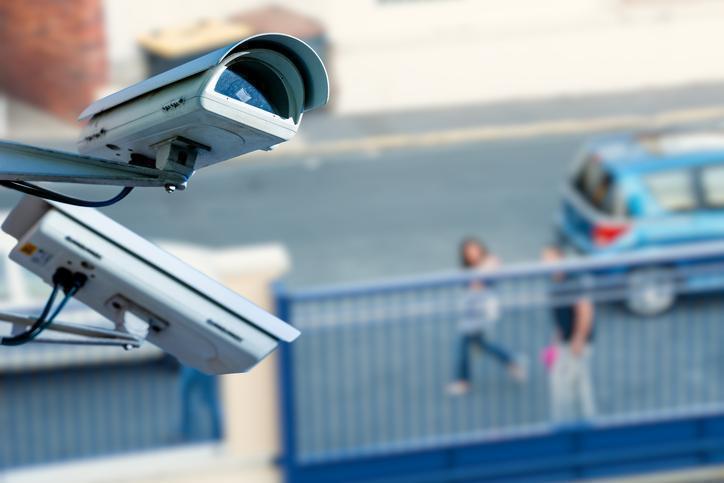
The cameras that comprise the City I.Q. program were described by the court as being attached to various streetlights. However, they were not “situated so (that) they could peer into businesses or residences,” capturing “only the ‘public right of way.” This camera system was further described as having a “fixed position and located throughout downtown San Diego and other parts of the city. The devices capture ‘environmental data, like temperature, humidity, pressure...traffic data, like car speeds, car counts, pedestrian data, bicycle data, and even video data.’ The video feature creates high-quality, wide-lens footage, but the devices do not record sound and do not act as gunshot detectors because the city did not ‘enable the microphones.’ Footage is stored on each camera’s hard drive for five days; if it is not retrieved within five days, the camera records over the footage.”
Via this system, the license plate on ....