
- Ref # CAC10044
- April 20, 2025
Must You Call for Medical Assistance for a Detainee? If You Don’t, You May Find Yourself on a Limb
By Robert Phillips, Deputy District Attorney (Ret).
Case Law:
The Fourth Amendment and timely medical care
Fourth Amendment violations and qualified immunity
Rule: Police officers must seek necessary medical attention for an injured detainee or arrestee by either promptly summoning the necessary medical help or by taking the person to a hospital. Failure to do so is a Fourth Amendment constitutional violation. However, for an officer to be held civilly liable, the rule of law must be “clearly established” by prior case law, putting the officer on notice that he or she is violating the plaintiff’s constitutional rights.
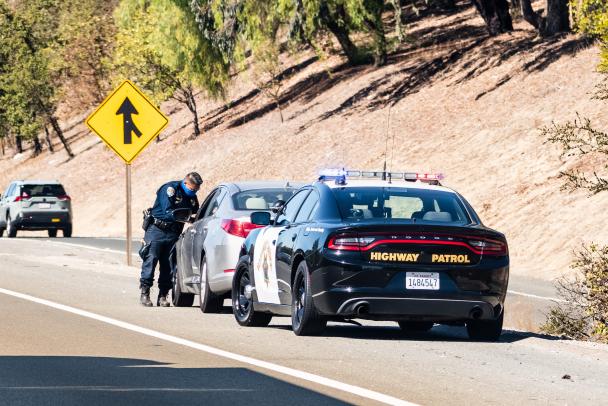
Facts: On June 1, 2018, plaintiff Steven D’Braunstein was involved in a single-vehicle car crash on a freeway onramp in Costa Mesa, California, around 4:50 p.m. A California Highway Patrol Officer responded, arriving within 10 minutes. The officer found the 55-year-old D’Braunstein standing next to his crashed car. It seems that D’Braunstein had driven his car head-on into a wall with sufficient force to deploy the steering wheel airbag and crush the hood, causing other major front and side damage. D’Braunstein told the officer that he had been driving at about 20 miles per hour when “[t]he car did something,” causing him to hit the wall, but otherwise he “[d]idn’t know what happened.” The officer noticed that D’Braunstein exhibited “dry mouth, slurred speech, profuse sweating, confusion, poor balance, slow reaction time and constricted pupils.” It was also noted that plaintiff “made multiple spontaneous and incoherent statements,” and that he had “difficulty answering basic questions, including where he was going and what had caused the collision.” D’Braunstein eventually asked if he could sit down because he was having difficulty maintaining his balance. The plaintiff having no visible injuries, the officer did not call for an ambulance, and instead began to evaluate him for possibly being under the influence of alcohol or drugs. D’Braunstein denied the use of either. In the absence of any indication that alcohol was involved, the officer suspected that D’Braunstein was under the influence of drugs. As ....