
- Ref # CAC10164
- September 17, 2026
Jury Questions & Self-Defense: Appellate Court Reverses Second-Degree Murder Conviction
By Robert Phillips
Deputy District Attorney (Ret).
A Perfect Self-Defense vs. an Imperfect Self-Defense: Jury Instructions and the Trial Court’s P.C. § 1138 Obligation to Answer the Jury’s Questions Relative to Those Instructions
People v. Brim (Jun. 17, 2026) 121 Cal.App.5th 168
Rule: A homicide is considered justified as a “perfect self-defense” where the defendant actually and reasonably believed the use of deadly force was necessary to defend himself from imminent threat of death or great bodily injury. Under such circumstances, the killing is not a crime. However, where the defendant kills while actually, but unreasonably, believes the use of deadly force was necessary, defendant is considered to have acted in “imperfect self-defense.” Where the imperfect self-defense rule applies, a homicide is no greater than an voluntary manslaughter. The trial court has a legal obligation to explain the law to a jury that has expressed confusion over what law applies.
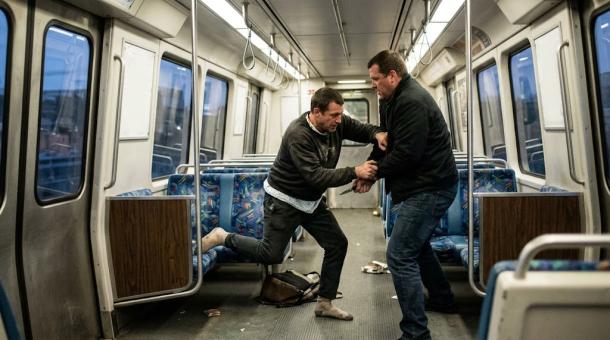
Summary: The defendant Jermaine Jeremiah Brim boarded a Bay Area Rapid Transit (BART) train without shoes and engaged in a physical altercation with another passenger (Oliver Williams) who responded aggressively after Brim touched, and apparently attempted to take, his shoes. The conflict escalated with Williams pulling out a knife and attempting to stab Brim. During the ensuing struggle, Brim gained control of the knife and stabbed Williams multiple times, resulting in his death. After fleeing the scene, Brim was arrested nearby and later charged in state court with murder.
At trial, Brim asserted that he acted in self-defense, citing his fear and prior traumatic experiences with knives, as well as evidence of diminished intellectual capacity (having an IQ of 78, placing him in the lower 7th percentile). The jury at Brim’s trial heard testimony from multiple witnesses, including experts on martial arts, psychiatry, and neuropsychology, as well as Brim himself. The jury was instructed on theories of murder, voluntary manslaughter, and self-defense, including “imperfect self-defense.” During deliberations, the jury asked specific questions about the relationship between self-defense ....