
- Ref # CAC10124
- January 22, 2026
Do You Use Perkins Operations? Know the Rules. Read More About This Recent Ruling on Agents Eliciting Evidence in a Jail Cell
Pressed for Time
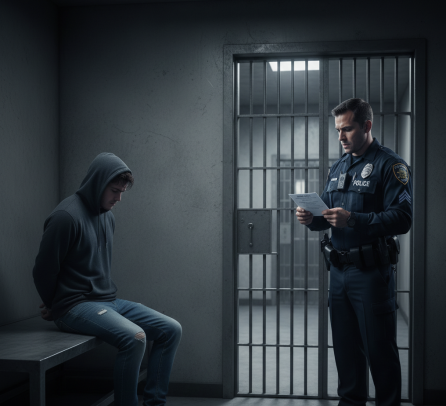
Just the Facts: In an unpublished decision, the court upheld the legality of putting four undercover agents into a jail cell with a murder suspect (referred to as a Perkins operation, citing Illinois v. Perkins (1990) 496 U.S. 292.) The agents, in a 3½ hour discussion with the defendant described by the court as “friendly and casual,” and after encouraging him not to invoke his right to counsel, suggested that he instead waive his rights, talk with investigators when questioned, and claim self-defense. The defendant followed the agents’ guidance when interviewed by detectives. At the defendant’s subsequent murder trial, the recordings of both the jail cell discussion with the undercover agents and the defendant’s interview by investigators were admitted into evidence over his objection, putting him at the scene of the murder and identifying him as the shooter. After noting that the undercover agents’ discussion with the defendant was neither threatening nor intimidating, the court rejected the defendant’s argument that his due process rights had been violated by this tactic. The court therefore upheld the use of a Perkins operation based upon the theory that there was no evidence of coercion.
Legal Issues and Case Citation
The issue of voluntariness during a Perkins operation
Noncoercive interrogation tactics by undercover officers
Miranda and the use of a Perkins operation
People v. Goehner (Aug. 6, 2025) 2025 Cal. App. Unpub. LEXIS 4850
Rule: Use of a “Perkins operation,” where undercover law enforcement agents are placed into a jail cell with a suspect and discuss their case, is not unlawful so long as the discussions remain nonthreatening and unintimidating. Encouragement during a Perkins operation by the undercover agents for a suspect to waive his rights to remain silent and to an attorney is not a Miranda violation.
Facts: A subject referred to only as A. Martinez lived in a trailer park in Desert Hot Springs in Riverside County. In March 2021, Martinez was standing near the trailer of a neighbor, identified as ....