
- Ref # CAC00064
- March 26, 2022
Special Relationships and the Duty to Warn
- A Government Agent’s Duty to Warn
- The “Special Relationship” Prerequisite to the Duty to Warn
Absent a “special relationship” between a government agent and a potential victim, the agent has no duty to warn the victim that she is in danger. A special relationship may be formed where a prospective victim relies to her detriment upon the representations of the government agent, giving rise to a duty to warn the victim of a potential danger to which the victim is otherwise unaware and to which she did not knowingly and voluntarily expose herself.
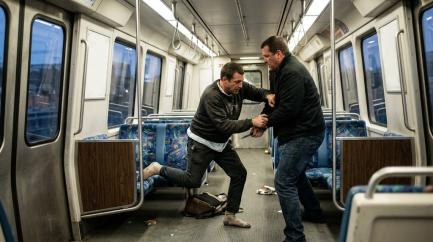
Rachel Renee Russell (victim) had a grandson—Sidney DeAvila—and a son—Steven E. Russell (plaintiff in this civil suit). (Steven Russell was apparently DeAvila’s uncle.) Rachel Russell raised DeAvila as if he were her son. The problem was, DeAvila had psychological problems beginning around the age of 12; being on antipsychotic medication by the age of 19. He began engaging in criminal activity at some point therein, eventually—as an adult—leading to prison time and parole. DeAvila continued to live with his grandmother, Rachel Russell, between 2007 and 2013. During this time period, DeAvila was constantly in trouble, periodically and consistently getting arrested, incarcerated, and then released, as described in excruciating detail over some five pages of this reported case decision. Aggravated by an addiction to alcohol, cocaine and methamphetamine, DeAvila typically engaged in dangerous assaultive type behavior. State Parole Officers Roy Lacy, and then Aldolfo Romero, as employees of the State Department of Corrections and Rehabilitation (referred to here as “the Department”), monitored DeAvila during this time period. The agents listed DeAvila as a “high-violent” parolee in their reports; a fact that was never relayed to his grandmother. In 2011, ....